For centuries, dogs have stood by the side of soldiers—not just in combat, but in the long, difficult journey home. While today we recognize the incredible work Service Dogs do for our veterans, this partnership has deep historical roots. From providing comfort in the trenches of World War I to performing complex, life-saving tasks for veterans today, the role of Service Dogs has evolved alongside our understanding of the visible and invisible wounds of war.
 World War I: Companions in the Trenches
The earliest known use of dogs by soldiers dates back to ancient times, but during World War I, dogs began to play a more noticeable role in modern warfare. Though not formally designated as “service dogs,” many soldiers formed deep bonds with dogs they encountered on the battlefield. These dogs were used to:
- Locate and assist wounded soldiers
- Deliver messages across dangerous terrain
- Guard camps and provide early warning alerts
- Offer comfort in a world filled with chaos and trauma
One well-known story involves a dog named Stubby, who served alongside American troops in WWI and became a decorated war dog. While these dogs weren’t trained as Service Dogs by today’s standards, their presence laid the foundation for the emotional and practical support that Service Dogs now provide.
 Post–World War II: The First Formal Service Dogs
After World War II, the need for rehabilitation among returning service members brought about the first formal use of Service Dogs—primarily to assist blind veterans. Organizations like The Guide Dog Foundation for the Blind (established in 1946) began training dogs specifically to aid those who had lost their sight in combat.
These dogs were among the first officially trained to help with tasks like navigating city streets, avoiding obstacles, and supporting independence in daily life.
 The Rise of Psychiatric Service Dogs
As medical understanding progressed, so did the recognition of Post-Traumatic Stress Disorder (PTSD) and other mental health challenges. By the 1990s and early 2000s, the Service Dog world expanded beyond physical disabilities to include psychiatric Service Dogs—specially trained to help with:
- Interrupting panic attacks or flashbacks
- Creating space in crowded areas
- Waking a veteran from nightmares
- Reminding them to take medications
- Alerting to signs of anxiety or distress
This shift represented a critical moment in veteran care, especially for those battling the “invisible wounds” of war.
 Today: Serving Those Who’ve Served Us
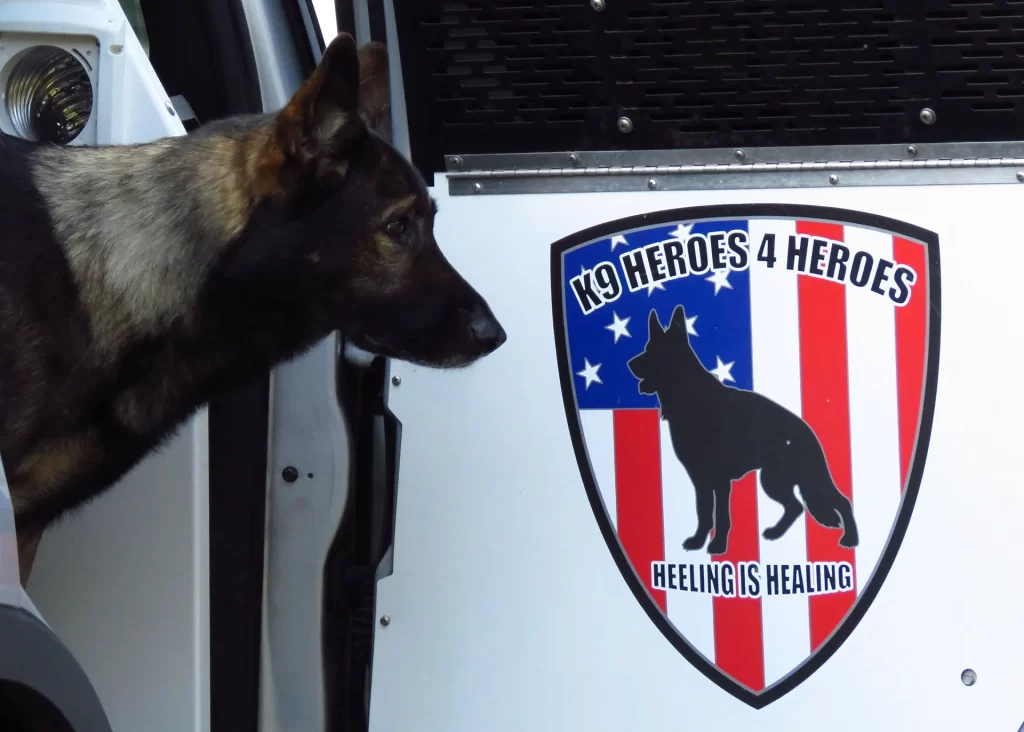
In today’s world, Service Dogs are trained to meet a wide range of needs for Veterans and First Responders. At K9 Heroes 4 Heroes, we honor this legacy by training and providing highly skilled Service Dogs at no cost to the recipient.
Each dog undergoes intensive training to ensure they’re ready to assist with the unique challenges faced by those who have sacrificed so much for our safety and freedom.
Whether it’s guiding a veteran through a crowded VA hospital, interrupting an oncoming anxiety episode, or simply providing the unconditional love that only a dog can offer—these animals are heroes in their own right.
 Continuing the Mission
The journey from the battlefields of the past to the training fields of today is a story of resilience, innovation, and the unbreakable bond between human and dog. At K9 Heroes 4 Heroes, we’re proud to be part of this ongoing mission—because healing doesn’t end when the war does.